Related
Summary
WriterAlan Mooreis known for multi - dimensional , complex characters , as well as his nuanced and insightful political comment – two dimension of his work that meet in the depiction ofV for Vendetta’santagonists , the dictatorial state make love as Norsefire . As Moore excuse in an audience , he want to depict the life-threatening threat of fascism , without robbing the fascists of the thing that make them the most terrific – their human race .
speak with BBC4 for theirComics Britanniadocumentary series , Alan Moore discussed the origins of Norsefire , the ruthless government ofV for Vendetta’sdystopian future Britain , which the Christian Bible ’s central character refuge to extremism to fight against .
Often , fiction portrays totalitarian governing as faceless monolith . This can alternatively help or undermine the anti - fascist themes in these floor . fin for Vendettadoes not have that job , as itacutely depicts the way fascism proliferate every aspect of every role ’s life , from those at the bottom , to the serviceman at the very top of Norsefire , Adam Susan .
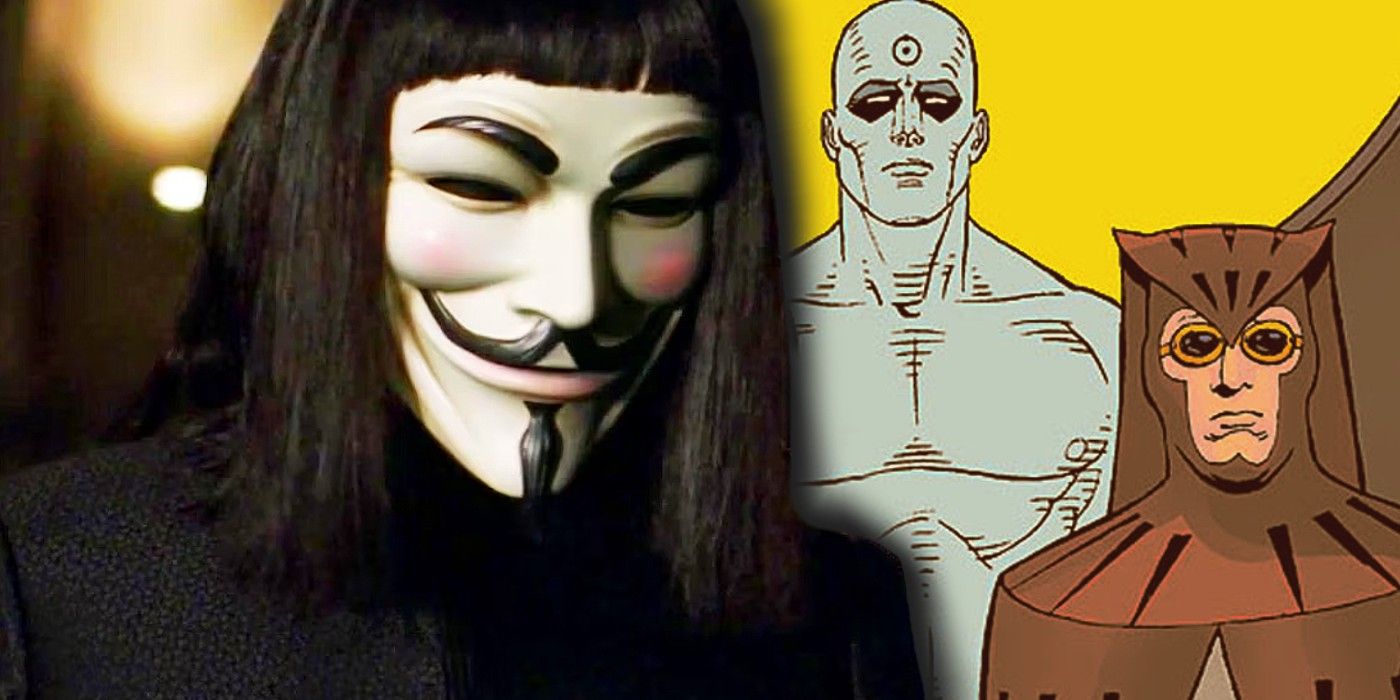
security guard and V for Vendetta have endured two very different ( but nonetheless impactful ) legacy , but their creator is only comfortable with one .
Fascism Is Ideologically Reductive – So Alan Moore Refused To Be
V For Vendetta Is Ideologically Complex
" I want to present some of the fascists as ordinary,“Alan Mooreexplained toComics Britannia . The author noted thatV for Vendetta’sportrayal of an oppressive ring - wing res publica would have had less value , less impact , had he claim a reductive approach to writing the story ’s fascistic characters . The central opposer ofVis the state , not its citizen – or even necessarily the hoi polloi that perpetuate it . Moore also note that he did n’t want to be reductive ofhis own ideological position :
" I did n’t want to just come in to this as a ego - confessed anarchist … and so , right , here ’s this nihilist , he ’s the unspoilt guy rope , here ’s all the bad fascists , they ’re the bad guys . I intend that ’s picayune , and diss to the proofreader . "
rather , Moore put a big deal of effort into depict his fascism as intimate and human .
V for Vendettadoes include truly evil individuals , notably the Norsefire agent Creedy , but as representatives of the bad a fascism can enable , rather than the end goal of the organisation itself . For the most part , though , the citizen and operatives of Norsefire are more complex than that . Which is to say , in many display case , they reply to the political conditions of their society the same path many average masses would react . As Moore tell :
" They were people who had made their pick for a understanding . Sometimes that understanding was cowardliness , sometimes it was want to get on , sometimes it was a true impression in those principle . "
As many anti - fascists have observe in the past , it is the hushed enabling , the passive deficiency of resistivity , among the public of an authoritarian country that allows it to last .
Susan Succumbing To “Fate” Is V’s Most Apt Metaphor
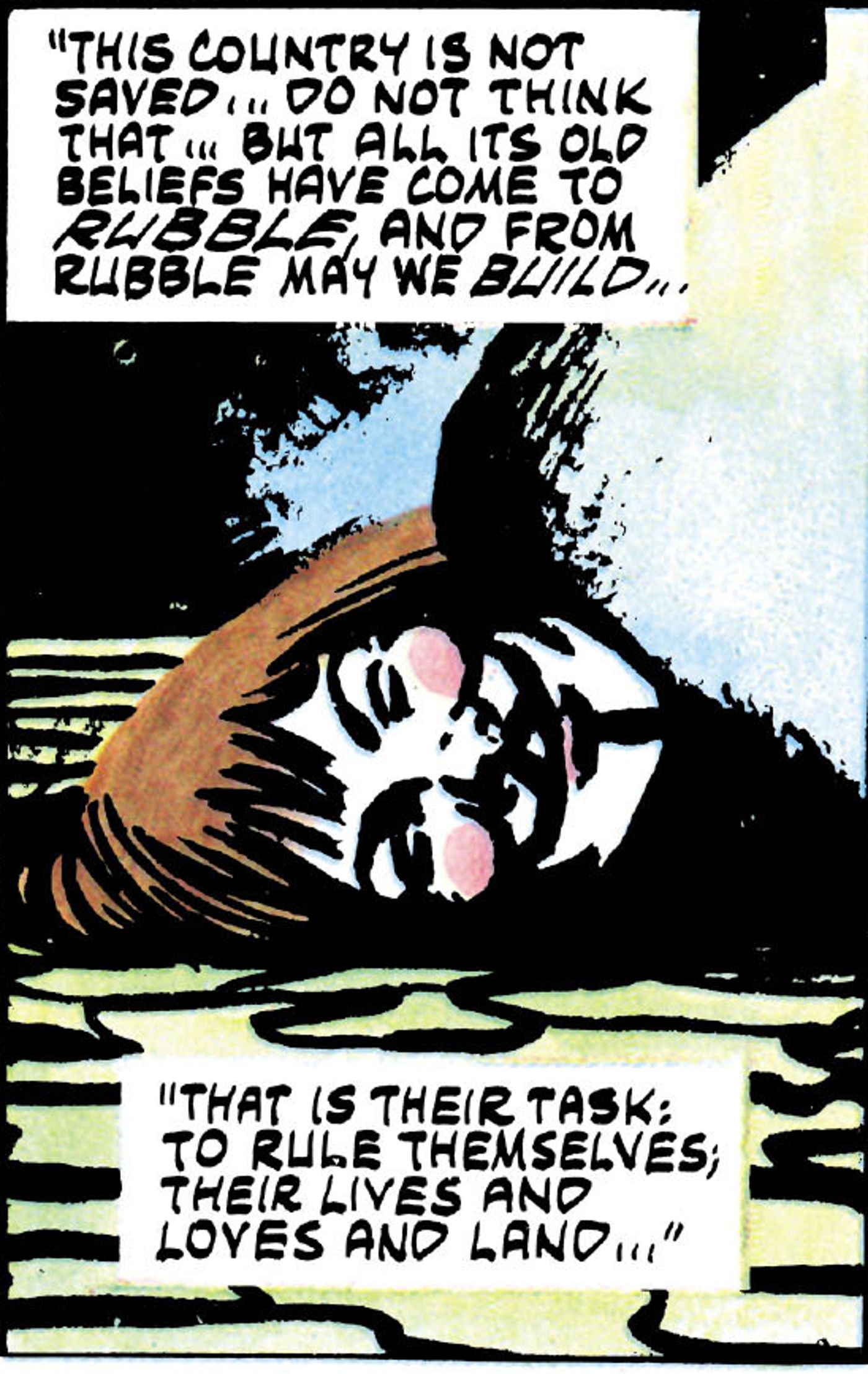
InV for Vendetta , Moore makes the totalistic obsession with control an overt element of the narrative , by having Adam Susan descend in love with the motorcar itself . The connection between the tool of subjugation and its wielder therefore becomes an fabulously resonant portrayal of ideology and its extremes .
Notable amongV for Vendetta’smany characters is the gentleman’s gentleman at the heart of the governance , Norsefire ’s leader , Adam Susan . Moore give readers a particularly notable brainwave into Susan , a theatrical role who in many ways reflects fascist ideology itself . He build an edifice of posture for report an inner weakness . He is largely depicted as fearful , and unable to serve as a member of society – leading him to demand that society adapt to his will , rather than the other way around . Susan devolves from paranoia to folly over the class of the story , as succumbs to his love for " Fate . "
" Fate , " inV for Vendetta , is the surveillance supercomputer thattransforms Norsefire into a true dystopian versionof what a fascist society could become . InV , Moore have the totalitarian fixation with control an open element of the narrative , by having Adam Susan fall in love with the machine itself . The connection between the tool of oppressiveness and its wielder therefore becomes an implausibly resonant delineation of ideology and its extreme . Having shun human connection his whole life , the character of Susan finds his true love – Norsefire ’s political orientation itself – embodied in the computing gadget , and his love for it put down him .
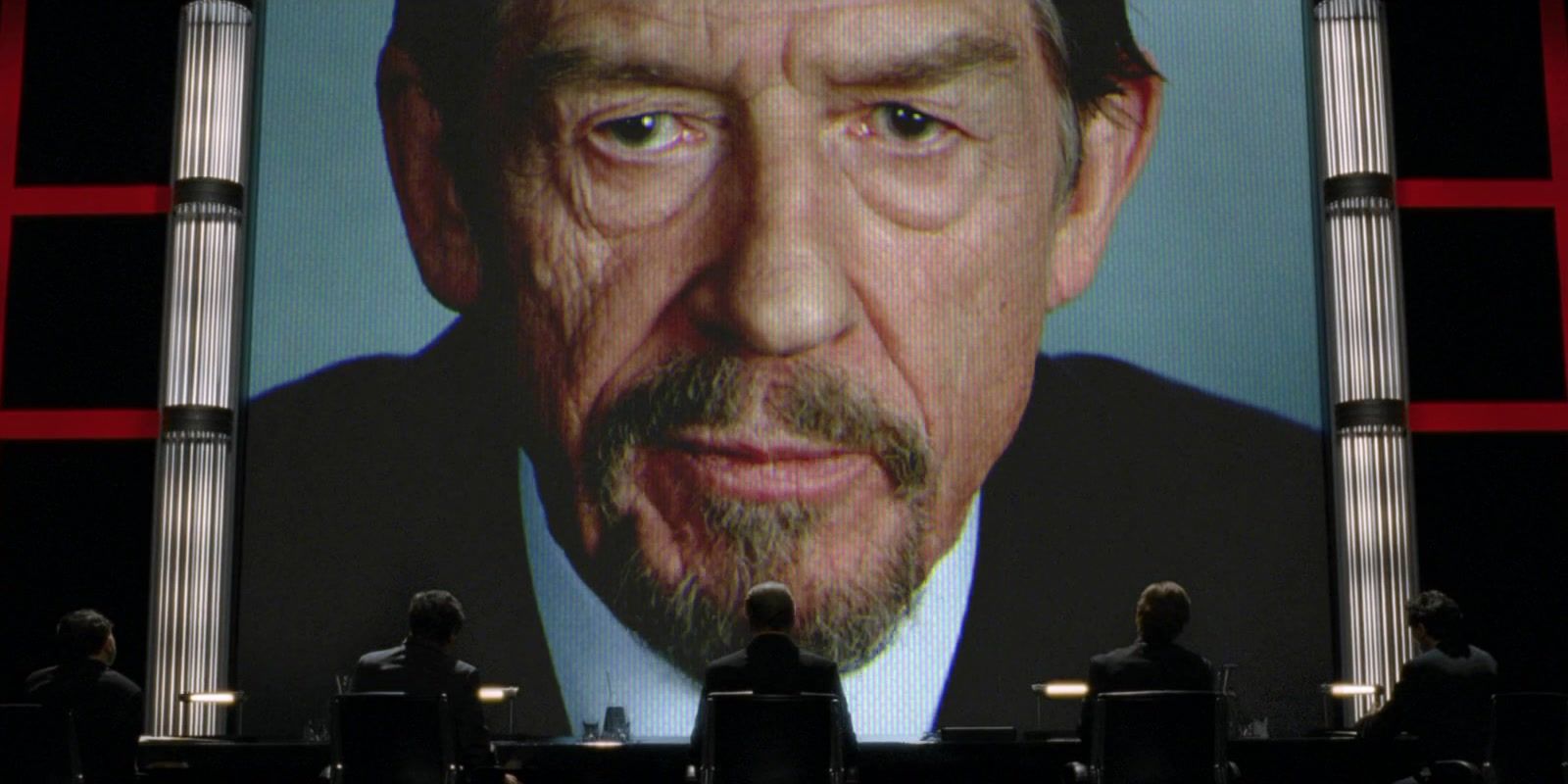
in the end , at the climax ofV for Vendetta , Susan is assassinate . His violent , ambitious subordinate Creedy usurp control , but is quickly wipe out himself by an underling . This destablization in Norsefire ’s leaders , coupled with V ’s dissemination of radical anarchist ideas , brings down the government . Consistently , in all of its plot of land choices , volt for Vendettaemphasizes the melodic theme that individual action results in alteration , for better or bad , while inactivity is essential to the alimony of the condition quo , whatever the prevailing ideology might be .
Alan Moore and artist David Lloyd ’s depiction of Norsefire remains one of the most powerful , relevant aspects of their story today – due in large part to their originative refusal to shorten fascism to a mere scoundrel . Instead , they strove to portray precisely what enables and draw out the horrors of authoritarian regimes .
According To “V,” Passive Acceptance Of “Fate” Leads To The Inheritance Of Rubble
Moore Perfectly Presents “The Banality Of Evil”
Of course , Norsefire can not be discussed without some historical linguistic context for real - life fascism . In the wake of World War II , philosopher Hannah Arendt described " the banality of evil " as the passive espousal by Germany ’s people of the Nazi government , which allowed the Nazis to perpetuate its crimes against human beings during the thirties , until the warfare ’s ending in 1945 . Speaking with BBC4 forComics Britannia , Alan Moore echo Arendt ’s position :
" We suggest that the Nazis , they were n’t from outer space . They were n’t from the depth of sin . They were butchers , and street sweep , and shoal instructor , and average mass from ordinary base on balls of life . They were n’t monsters … but they just went along with fascism , when fascism was the order of the daytime . "
This is the on-key repugnance of fascism , somethingV for Vendettacaptures in a profound way .
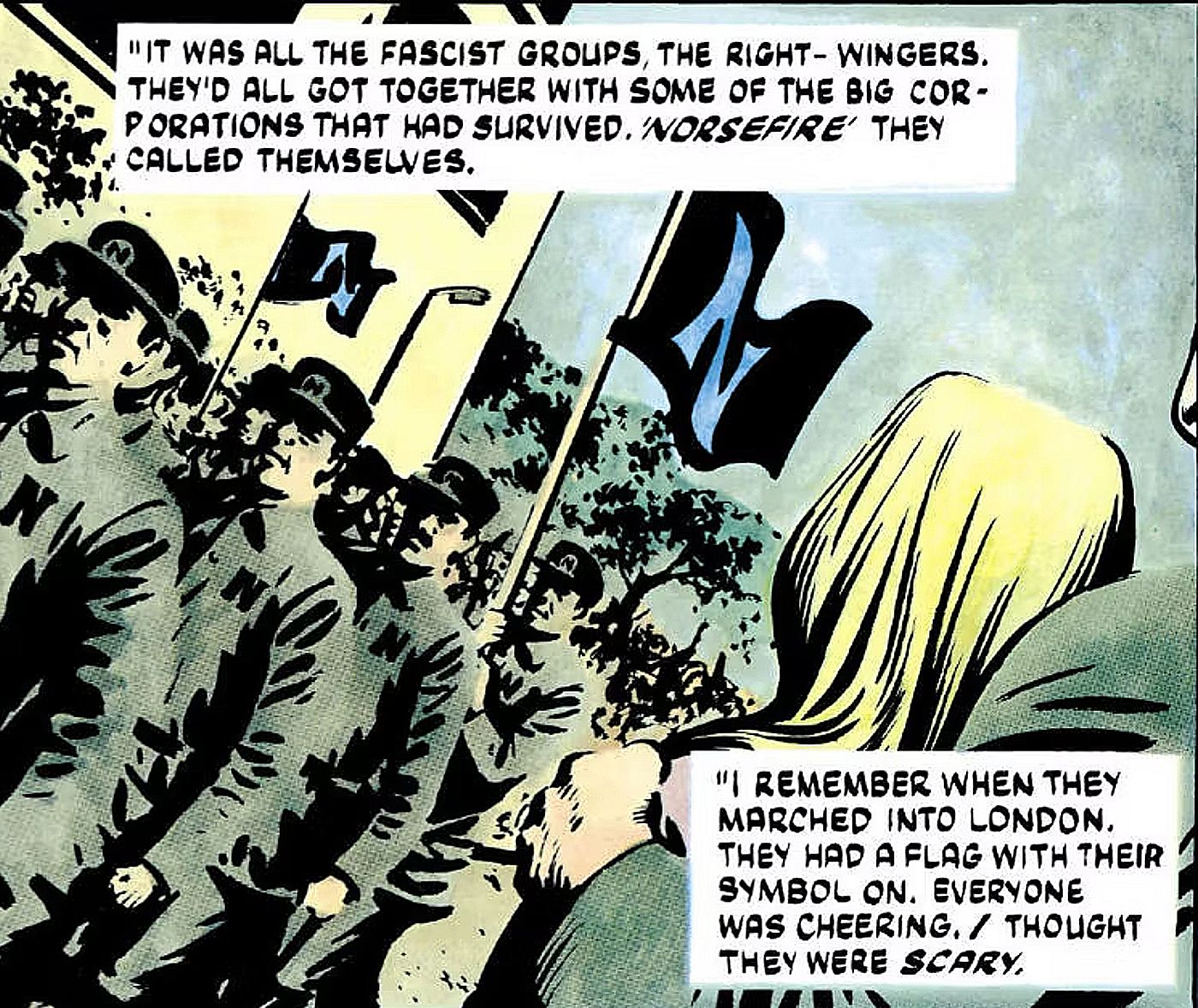
Alan Moore and creative person David Lloyd ’s line drawing of Norsefire remains one of the most stiff , relevant aspect of their tale today – due in large part to their creative refusal to reduce fascism to a mere villain . rather , they strove to depict precisely what enables and exsert the horrors of tyrannic regimes . While the system may be inhuman , and inhumane , its masses remain exactly that . This is both a speciality , and a impuissance for fascistic system – something thatV for Vendettadepicts in a room that readers continue to extract great note value from .
Though Alan Moore has"disowned,“V for Vendettain recent years , it remains one of his most astute whole caboodle of fiction . Moore weaves an intricate , and necessarily delicate , arras of multiple ideologies , in a way that never lapse into didacticism or caricature . Moore ’s own political predilection are perhaps plain in the work , upon closer depth psychology , but they never overcome the human element of the narrative . V for Vendettaranks among the essential anti - fascist literature of the late twentieth century , for how it humanise its characters , even the worst among them , throughout .
Source : Comics Britannia , BBC4